





What scalability options exist for off-grid solar inverter systems?
Off-grid solar inverter systems are pivotal for energy independence, especially in remote areas. Understanding scalability is crucial for ensuring your system meets current needs and adapts to future demands. Below are six specific questions frequently asked by beginners, along with in-depth answers to guide your decision-making process.
1. How do I accurately size an off-grid solar inverter to meet my household's energy consumption?
Accurate sizing of an off-grid solar inverter involves calculating your total daily energy consumption and considering the peak power requirements of your appliances. Begin by listing all devices you intend to use, noting their wattage and estimated daily usage hours. For instance, if a refrigerator consumes 150 watts and operates for 8 hours daily, it contributes 1,200 watt-hours (Wh) to your daily consumption. Sum the watt-hours of all devices to determine your total daily energy needs. Next, account for surge power, as many appliances require additional power during startup. Ensure your inverter can handle these surges to prevent overloads. It's advisable to select an inverter with a continuous power rating slightly higher than your peak load to accommodate these fluctuations.
2. What are the key factors to consider when selecting an off-grid solar inverter for future scalability?
When planning for future scalability, consider the following factors:
Modular Design: Opt for inverters that support parallel connections, allowing you to add more units as your energy needs grow. For example, the SUNGOLDPOWER 11.4KW 48V Hybrid Solar Inverter supports up to 9 inverters in parallel, totaling 102.6kW.
Input Voltage Range: Choose inverters with a wide input voltage range to accommodate additional solar panels without requiring a new inverter.
Battery Compatibility: Ensure the inverter is compatible with various battery types and sizes, facilitating easy expansion of your energy storage capacity.
Charge Controller Integration: Inverters with integrated charge controllers can simplify system expansion by reducing the number of components.
3. How can I ensure the components of my off-grid solar system are compatible and of high quality?
Ensuring component compatibility and quality involves:
Manufacturer Specifications: Review the technical specifications of each component to confirm they match in terms of voltage, current, and power ratings.
Certification and Compliance: Verify that all components meet industry standards and certifications, such as UL, CE, and ISO, indicating adherence to safety and performance criteria.
Reputable Brands: Select components from well-known manufacturers with positive reviews and a history of reliability.
Professional Consultation: Engage with a certified solar installer or consultant to assess compatibility and quality, ensuring optimal system performance.
4. What are the common mistakes to avoid when designing a scalable off-grid solar inverter system?
Common mistakes include:
Underestimating Future Energy Needs: Focusing solely on current consumption without considering potential increases can lead to inadequate system capacity.
Overlooking Component Compatibility: Mismatched components can result in inefficiencies and system failures.
Neglecting Battery Sizing: An improperly sized battery bank can lead to insufficient energy storage or unnecessary costs.
Ignoring System Expansion Plans: Not planning for future scalability can result in costly system overhauls.
5. How do environmental factors affect the scalability and performance of off-grid solar inverter systems?
Environmental factors such as temperature, humidity, and exposure to dust or moisture can impact the performance and longevity of your off-grid solar inverter system. Inverters with higher IP (Ingress Protection) ratings offer better resistance to environmental elements. For instance, inverters with an IP65 rating are dust-tight and protected against water jets, making them suitable for harsh conditions. Additionally, consider the operating temperature range of the inverter; models designed to operate in extreme temperatures can enhance system reliability.
6. What are the maintenance requirements for off-grid solar inverter systems to ensure long-term scalability?
Regular maintenance is essential for the longevity and scalability of your off-grid solar inverter system:
Routine Inspections: Periodically check all components for signs of wear, corrosion, or damage.
Cleaning: Keep the inverter and associated equipment clean to prevent dust buildup, which can affect performance.
Firmware Updates: Regularly update the inverter's firmware to ensure optimal performance and access to new features.
Battery Maintenance: Monitor battery health and replace them as needed to maintain system efficiency.
By proactively addressing these aspects, you can design an off-grid solar inverter system that not only meets your current energy needs but also adapts to future demands, ensuring long-term sustainability and efficiency.
For personalized advice and a tailored quote, please contact us at info@csinverter.com or visit our website at www.csinverter.com.


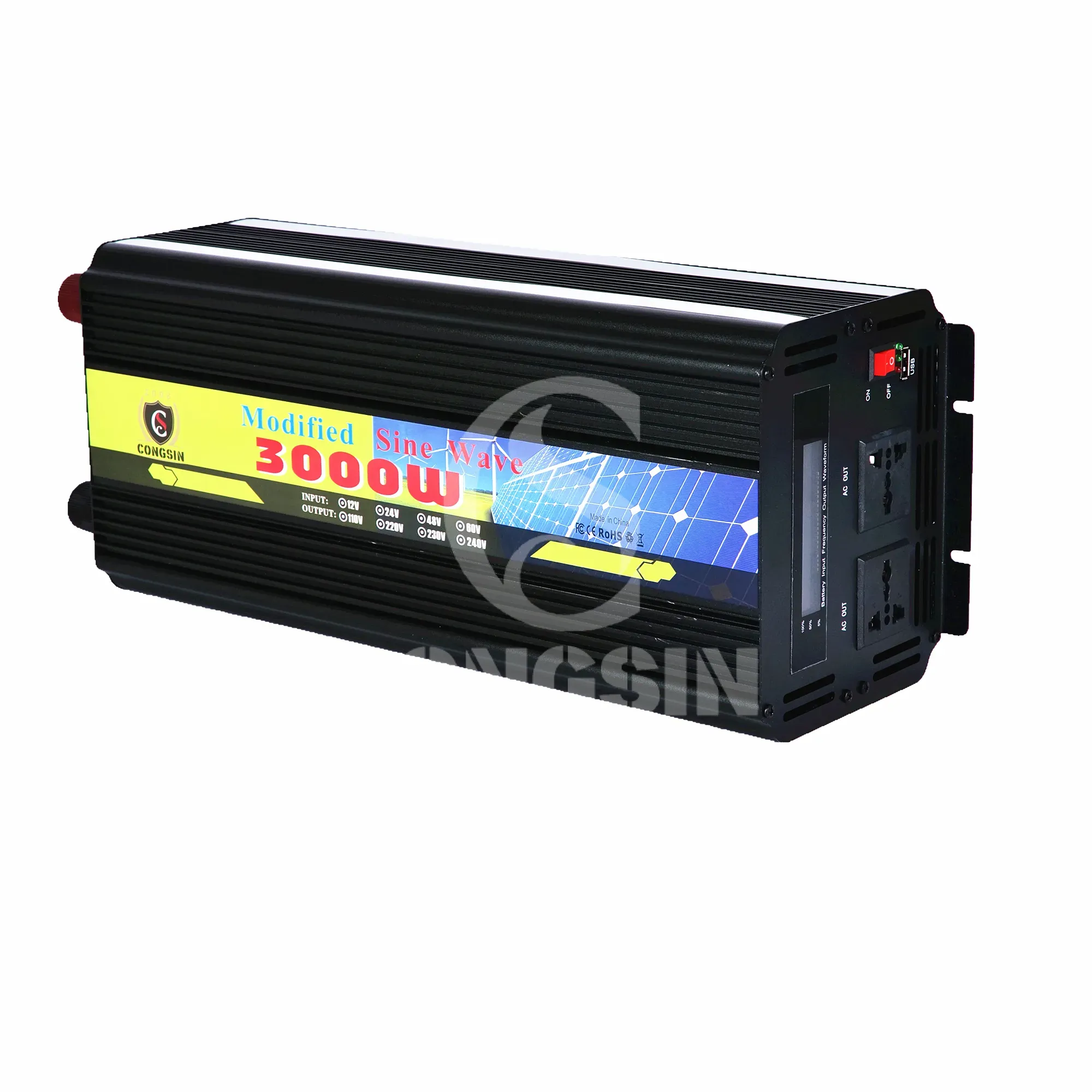
Modified Sine Wave Inverters
What is the function of the independent control switch?
The independent control switches for DC and AC can respectively control the on and off of DC and AC circuits, facilitating the separate management of power supply for different types of devices and improving power usage safety and flexibility.
How to connect to the battery?
Use the included battery clips, connect the red clip to the positive pole of the battery and the black clip to the negative pole. Ensure good contact and no short-circuit risk when connecting.
How many devices can it power at the same time?
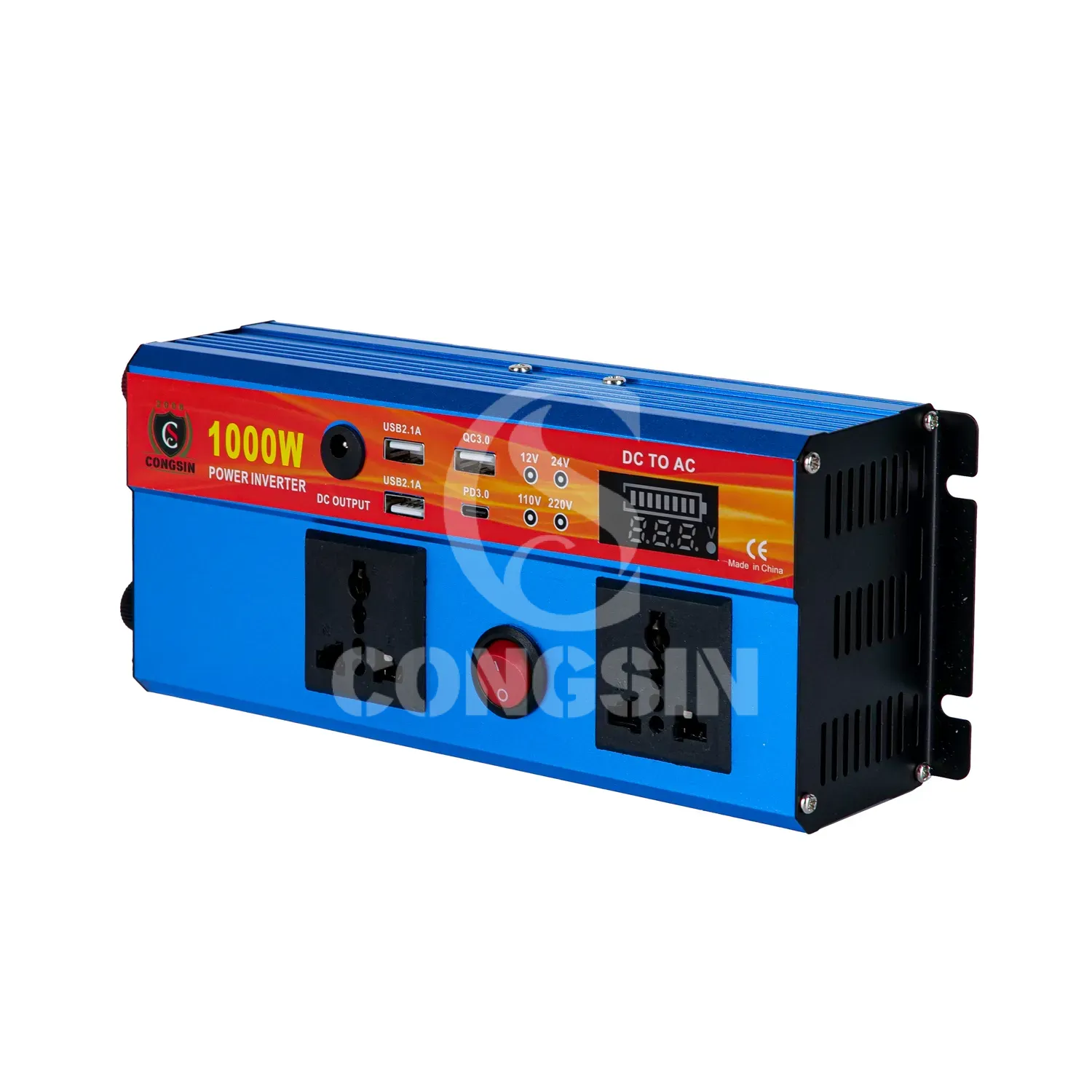
Dual universal sockets + two USB ports can power multiple devices (such as two home appliances + two mobile phones) at the same time, as long as the total power does not exceed 600W.
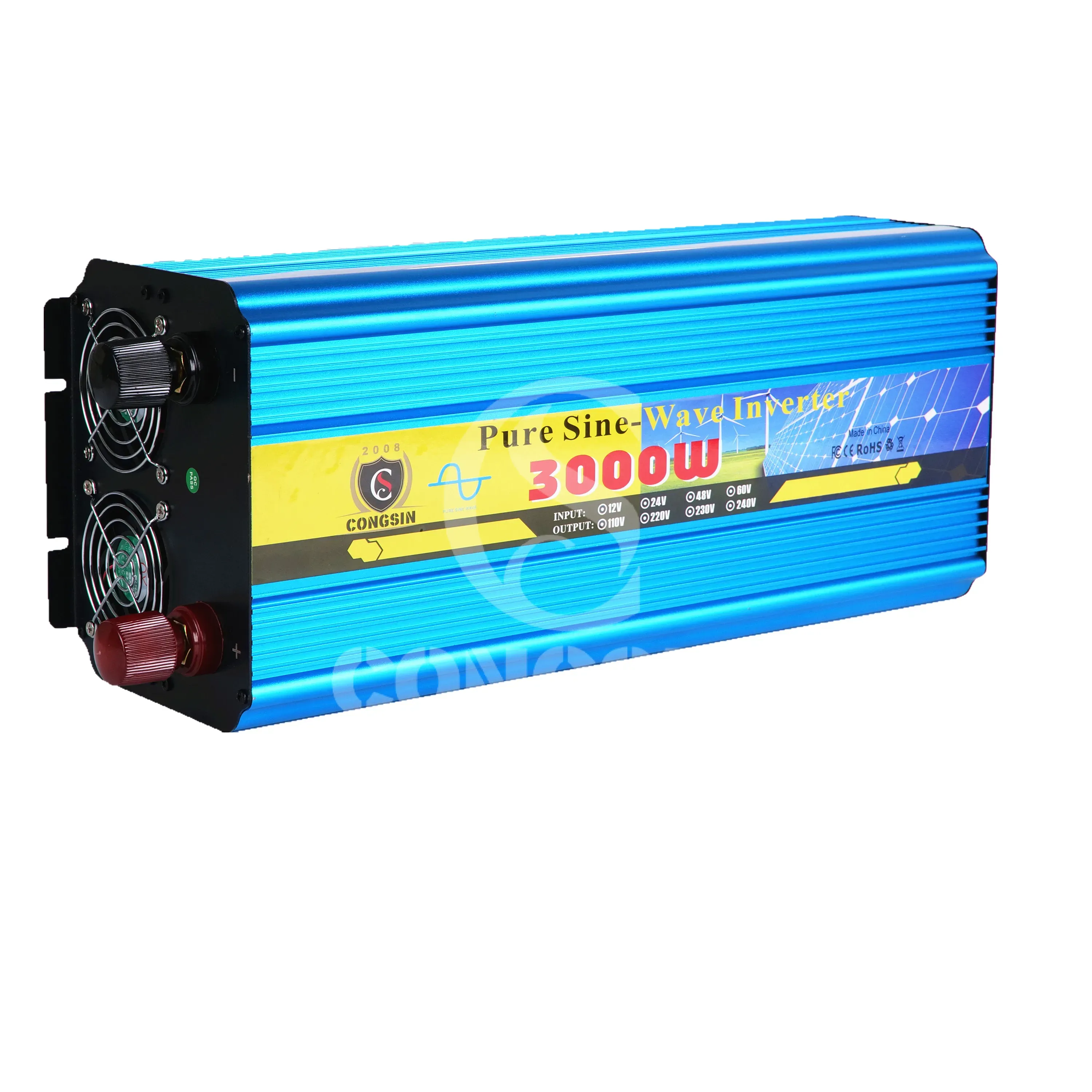
Pure Sine Wave Inverters
Can this inverter drive a 3P air conditioner and a refrigerator at the same time?
Yes. The rated power of a 3P air conditioner is about 2200W-2500W, and an ordinary double-door refrigerator is about 150W-300W, with a total power of about 2350W-2800W, which does not exceed the 3000W continuous power; and the peak 6000W can cope with the instantaneous startup impact of the air conditioner. When using, ensure the battery capacity is ≥200Ah (12V) to ensure battery life.
Can the 3 AC sockets drive high-power devices at the same time?
Yes, but it is necessary to ensure that the total power of the 3 devices does not exceed 2000W (continuous power). For example, it can drive 1 1000W electric oven + 1 500W microwave + 1 400W printer at the same time (total power 1900W), avoiding total power overload to trigger the protection mechanism.
Get in Touch with Our Team
You can also communicate with us directly through our online contact form. Please fill in the following information, and our team will contact you as soon as possible after receiving your message.

CONGSIN is a trusted OEM factory for power inverters, solar charge controllers, and DC converters. Reliable solutions for global B2B buyers.
 High Quality
 7/24 Service
 Guaranteed Warranty
© 2025 Congsin. All Rights Reserved.